


Looking For Natural Eye Support? Here Are 10 Things You Should Know About Lutein Complex Supplement

Navigating “eye health” supplements can feel overwhelming because so many products sound similar, but they don’t all do the same thing. If you spend a lot of time on screens, drive at night, or you’re simply trying to stay ahead of age-related vision changes, it helps to understand what lutein is and what a lutein complex supplement is actually designed to support.
Below are 10 practical things to know: without the hype: so you can make a more informed choice.
1) Lutein is a carotenoid (a plant antioxidant) that concentrates in your eyes
Lutein is a carotenoid, which is a natural pigment found in many plants. “Antioxidant” means it helps neutralize free radicals: unstable molecules that can contribute to oxidative stress in your tissues.
What’s unique is that lutein doesn’t just circulate in your body; it’s found in high amounts in the macula, the central part of your retina that helps you see fine detail (reading, recognizing faces, driving).
Why that matters: when nutrients naturally accumulate in a specific tissue, it’s often because that tissue uses them for protection or performance.
2) It helps filter blue light from screens and LEDs
One of lutein’s best-known roles is acting like an internal “filter” for high-energy visible (HEV) blue light. Blue light is emitted by phones, monitors, tablets, TVs, and many LED bulbs.
You can’t avoid blue light entirely (and you shouldn’t try to), but higher blue-light exposure may contribute to eye fatigue for some people: especially when paired with long hours of close-up focus and reduced blinking.
If this sounds like you, lutein may be relevant:
- You work at a computer most days
- You use your phone at night
- You notice tired, dry, or “gritty” eyes after screen time
Tip: Blue-light glasses can be helpful for comfort, but nutrition support is a different angle: focused on what’s happening inside the eye.
3) Lutein is strongly linked to macular health as you age
Age-related macular degeneration (AMD) is a common cause of vision loss in older adults. While supplements can’t “cure” AMD, lutein is one of the more researched nutrients connected to macular pigment density (the protective layer in the macula).
Some population research has associated lutein intake with lower risk of advanced AMD, and clinical studies have looked at lutein as a supportive nutrient for macular function.
Bottom line: if you’re thinking long-term (especially as a senior), lutein is often on the short list of nutrients discussed for macular support.
4) It may support visual acuity and contrast sensitivity (the “clarity” part of vision)
A lot of people focus on “20/20,” but daily life is also about contrast sensitivity: how well you can detect edges and differences between light and dark.
That matters for:
- Night driving and dusk conditions
- Seeing steps/curbs
- Reading in dim lighting
- Screen readability with glare
By supporting macular pigment, lutein may help with how your eyes handle bright light and contrast-heavy tasks.

5) Lutein is often paired with zeaxanthin (and that combo is worth understanding)
A “complex” product usually means lutein is combined with other supportive ingredients. The most common partner is zeaxanthin, another carotenoid that also concentrates in the retina.
Think of lutein and zeaxanthin as teammates:
- Both help support macular pigment
- Both play a role in light filtering and antioxidant defense
- They’re commonly included together in eye-focused formulas
What to look for on labels: a lutein complex supplement that clearly lists ingredient amounts (not just “proprietary blend”), so you can compare apples to apples.
6) Taking lutein with fat can improve absorption
Lutein is fat-soluble, meaning your body absorbs it better when it’s taken with a meal that contains dietary fat.
Practical examples:
- Eggs, yogurt, avocado, olive oil, nuts
- A regular lunch or dinner (instead of an empty stomach)
Simple routine: take your lutein supplement with your biggest meal of the day. It’s an easy change that can make supplementation more efficient.
7) Food matters: and supplements are meant to “fill the gap,” not replace it
Lutein naturally occurs in foods, especially:
- Dark leafy greens (kale, spinach, collards)
- Broccoli, peas
- Egg yolks (surprisingly bioavailable)
In real life, though, many people don’t eat lutein-rich foods consistently. That’s where supplementation can make sense: it’s a way to support steady intake when your diet varies week to week.
A realistic approach: aim for food first, then use a supplement for consistency.
8) Results usually require consistency (think months, not days)
With nutrients that support tissue over time, it’s important to set expectations. Lutein doesn’t work like eye drops. Research commonly evaluates outcomes over weeks to months, not overnight.
If you’re using a lutein complex supplement for long-term support, consider:
- Giving it at least 8–12 weeks of consistent use
- Tracking comfort or visual performance changes in a simple way (screen fatigue, glare sensitivity, night driving confidence)
- Staying consistent with sleep and hydration (both matter for eye comfort too)
9) Common dosage ranges vary, so the “right amount” depends on your goal
You’ll see lutein products across a wide range of amounts. Many studies and eye-nutrition discussions commonly reference single-digit to low double-digit milligrams per day, but needs can vary.
What changes your “best fit”:
- Age and baseline diet (lots of greens vs. not many)
- Screen time and lifestyle
- Whether you’re combining it with other carotenoids (like zeaxanthin)
- Guidance from an eye care professional, especially if you have diagnosed eye conditions
Important: if you’re under care for AMD, cataracts, or other eye disease, it’s smart to discuss supplementation with your optometrist or ophthalmologist so it aligns with your overall plan.
10) Eye supplements should be judged by quality and manufacturing standards, not just ingredients
This is where many people get stuck: two bottles can list similar ingredients, but differ in quality. When evaluating a lutein complex supplement, pay attention to:
- Transparent labeling – clear amounts per serving
- Third-party quality mindset – look for GMP manufacturing (Good Manufacturing Practices)
- Reasonable formulation – not overloaded with dozens of “fairy dust” ingredients
- Consistency and storage – follow the label for best stability
A quick note on “targeted health solutions” (because eyes don’t exist in a vacuum)
Your eyes are influenced by whole-body factors like metabolic health, inflammation, circulation, and nutrient status. That’s why people often build a “stack” that supports different goals over time. Depending on your needs, you might also see interest in things like:
- Bitter melon complex (often used in wellness routines that focus on healthy glucose metabolism)
- Maca root complex (commonly used for energy, mood, and vitality support)
- Alkaline booster tablets / alkaline tablets (used by people aiming to support overall wellness habits)
- Evening primrose oil for women (often chosen for women’s wellness support)
- Arginine complex supplement (commonly associated with circulation support routines)
- Super prostate formula supplement (a targeted category for men’s wellness)
- Lycopene 40 mg softgels (lycopene is another carotenoid antioxidant often discussed for general antioxidant support)
- NMN 300mg supplement (frequently discussed in longevity and cellular energy conversations)
You don’t need all of these, but it helps to see lutein as part of a bigger, practical health picture.
How to choose a lutein complex supplement without overthinking it
If you want a simple checklist, use this:
- Does it list lutein amount clearly (mg per serving)?
- Does it include supportive carotenoids like zeaxanthin (if desired)?
- Is it easy to take daily (tablet/softgel, serving size)?
- Is it made under GMP standards in the USA?
- Will you actually take it consistently with food?
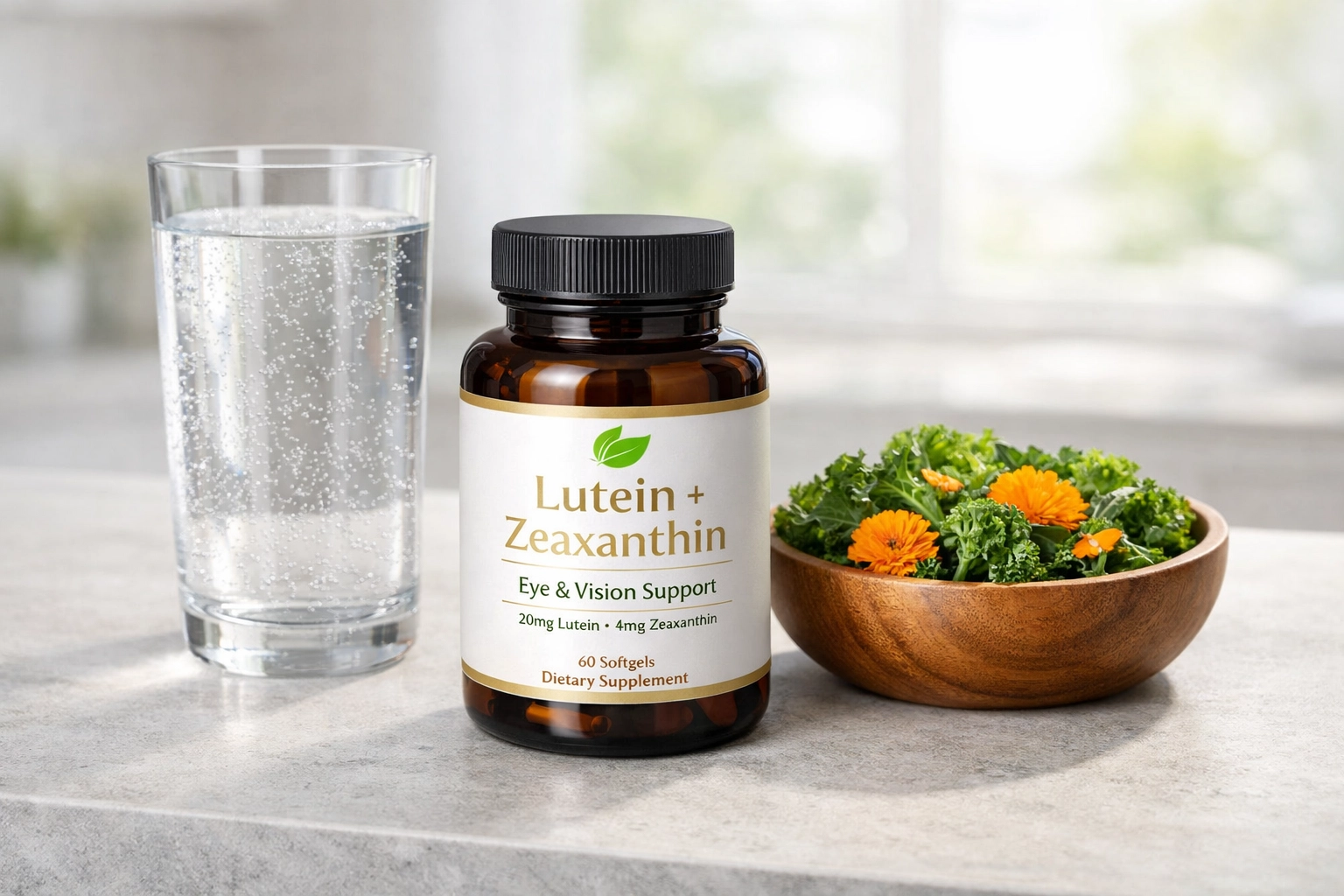
Where Esmond Natural USA fits in (brief and simple)
If you decide a lutein complex supplement makes sense for your routine, Esmond Natural USA focuses on practical, targeted formulas made in the USA under GMP standards. You can view our Lutein Complex product here: https://esmondnaturalusa.com/products/lutein-complex-supports-eye-health-usa-fda-gmp-npac-60-tablets

